
Dr. Alexander (Sasha) Davydov, who earned his doctorate in Mechanical Engineering from UC Santa Barbara in 2025, is our 2026 Lancaster Dissertation Awardee in Math, Physical Sciences, & Engineering.
Before he pursued his PhD at UCSB, Sasha received his bachelors degrees in Mechanical Engineering and in Mathematics from the University of Maryland in 2020. He is the recipient of a Best Student Paper Finalist Award at ACC 2022, the O. Hugo Schuck Best Paper Award in 2023, and the 2024 IEEE Control Systems Letters Outstanding Paper Award for his work on robustness of neural networks. His work has been supported by the NSF Graduate Research Fellowship, the UCSB Chancellor's Fellowship, and the Air Force Office for Scientific Research. He is currently working as an Assistant Professor in the Mechanical Engineering Department at Rice University and is a member of the Ken Kennedy Institute.
In this Commencement Q&A, Sasha shares what drew him to his doctoral research at UCSB, the importance of collaboration in his department, and details about his new role at Rice University.
Q&A
It felt great to get the news that I was awarded the Lancaster for my dissertation! The dissertation is the culmination of my years at UCSB and my research over that time. My dissertation "Contraction Theory in Control, Learning, and Optimization" was written one chapter at a time and each chapter was published either as a journal paper or in conference proceedings. Surprisingly, the order in which the papers were written does not correspond to the order in which the chapters are presented. The most challenging part of writing the dissertation was in getting their journal / conference versions through peer review! Once they were in their final forms, most of the dissertation process was ensuring that I was telling a cohesive story throughout.
For that, I need to thank my undergraduate mentors at the University of Maryland: specifically Dr. Yancy Diaz-Mercado and Dr. Derrick Yeo. I was always interested in mathematical aspects of engineering, but they helped guide me to the broad field of control theory. Control theory is an interdisciplinary branch of engineering interested in shaping the behavior of dynamic systems using feedback. It is the underlying technology enabling automatic cruise control, temperature control in buildings, autopilot in airplanes, and other technologies we take for granted. I enjoyed being able to do mathematical analysis to ensure that physical systems operate reliably.
The answer is twofold. First, of course, is my advisor, Francesco Bullo. In my undergraduate research, I studied multi-robot coverage control, an application area in control theory that Francesco helped define. Second, the campus tour when I visited in February 2020 (right before Covid shut everything down) was amazing. The location, weather, and research environment were everything I could have hoped for and more! These two factors together solidified UCSB as the place for me.
It was an amazing experience. Francesco has always been generous with his time and has been actively involved in research. He was always eager to hear about my research progress, and his passion for control theory has been contagious. I could not have asked for a better advisor. I am also grateful to have had many mentors along the way during my Ph.D. Since I started, I was very lucky to get to interact and exchange ideas with postdocs in the lab and the great professors here at UCSB. They have all been incredibly willing to listen to my ideas and weigh in, and I am thankful for all of them.
I was very fortunate to be a part of UCSB's Center for Control, Dynamical Systems, and Computation (CCDC), a cross-departmental center dedicated to topics surrounding control theory. This center featured weekly seminars and occasional social events that helped me learn more about what others were working on and what important problems were. In terms of collaborations, I was very fortunate to work with Francesco who instilled in me a collaborative mindset. Almost all of my papers with Francesco had at least one additional coauthor. In some cases, these were other students or postdocs in our lab, but we also worked with other professors outside UCSB.
Honestly, I stumbled upon the topic of contraction theory mostly by coincidence. Contraction theory is essentially a robust notion of stability and provides many useful corollaries for physical engineering systems. When I decided to come to UCSB, Francesco and I had decided that I would work on a multi-robot control problem, extending some of my undergraduate research work. However, in my first quarter, Francesco was teaching a special-topics course on contraction theory and we were all required to do a final project. Rather than picking one of the pre-selected final projects, my project stemmed from an intellectual curiosity in Francesco's lecture notes. In essence, Francesco had a skeleton of an underlying theory for contraction but was missing the mathematical connecting link. This final project was speculative but I had managed to find the key missing link in an old 1961 mathematics paper (Lumer, G., 1961. Semi-inner-product spaces. Transactions of the American Mathematical Society, 100(1), pp.29-43.). This final project formed the basis of my first journal paper at UCSB and it became one of my dissertation. After that, I was hooked, and I spent the rest of my time at UCSB working on this topic.
In terms of my research goals, I am interested in developing theory that enables the reliable control of physical engineering systems. Many physical systems extend beyond our current capabilities to mathematically analyze. I hope to bring new tools from control theory, optimization theory, and machine learning to better understand them and design strategies for them to operate safely and reliably.
I am currently enjoying my new role as an Assistant Professor in the Department of Mechanical Engineering at Rice University in Houston, TX. In this role, I get to continue to pursue my research interests in the reliable control of engineering systems. I get to work with talented and bright students and it is incredibly rewarding to watch them tackle challenging research problems. I am also given the flexibility to build my lab as I see fit. Right now, we have a nice open space where small-scale cars can drive around quickly and make decisions autonomously. At the same time, I am teaching students foundational topics in mechanical engineering. In Spring 2026, I taught Rigid Body Dynamics, a class I TA'ed once as a Ph.D. student here at UCSB. Moving from being a TA to the main instructor has been an incredibly rewarding experience!
DID YOU KNOW?
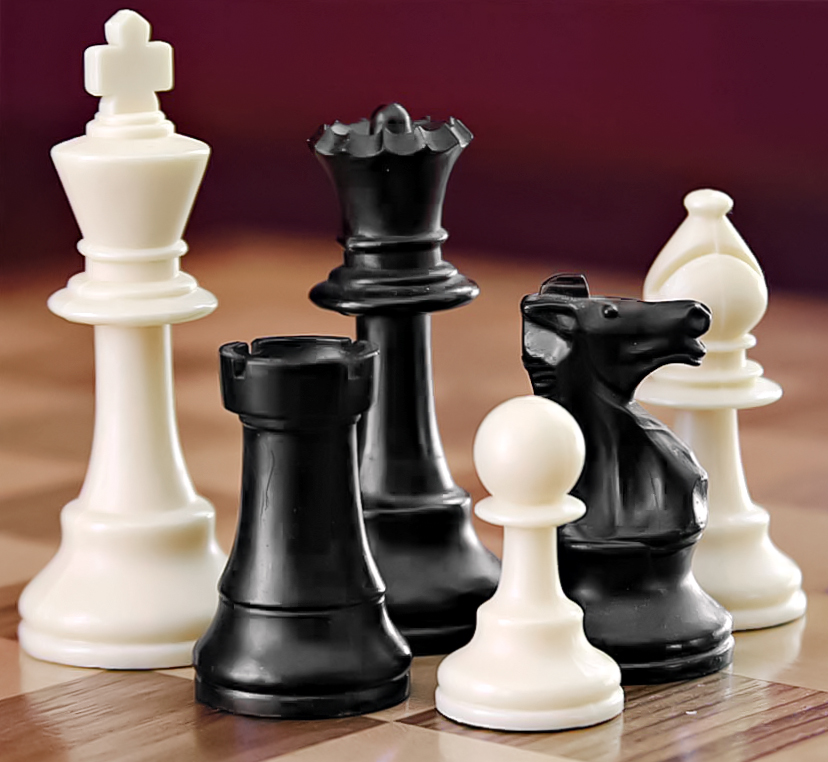
Sasha is a competitive chess player with titles of chess expert and candidate master and a US Chess Federation rating of 2162.
Read more about Sasha's work and areas of expertise here.